

Inflation is a key economic concept referring to the sustained increase in the general price level of goods and services over a specific period. As inflation rises, the purchasing power of money declines, and the cost of living increases. In developing economies like Iran, inflation rates can reach alarming levels due to factors such as budget deficits, liquidity growth, currency fluctuations, and economic sanctions. Consequently, managing assets in such an environment becomes a significant challenge.
Introducing Gold as a Safe-Haven Asset in Inflationary Conditions
In times of economic instability and rising inflation, investors consistently seek a safe haven to preserve the value of their capital. Gold is globally recognized as one of the most important safe-haven assets. Unlike national currencies, gold is not directly affected by money printing or monetary policies, making it particularly attractive during inflationary periods. In Iran, with rising inflation and dollar volatility, the gold market has consistently been one of the primary choices for individuals aiming to protect their assets’ value.
Comprehensive Analysis of Inflation’s Impact on Gold Prices in Iran
This article aims to provide a thorough and precise examination of the relationship between inflation rates and gold prices in Iran. By analyzing historical data, we will explore the psychological and tangible effects of inflation on the gold market and address whether investing in gold is truly an effective strategy to combat inflation in Iran. Additionally, we will consider government economic policies, exchange rates, and investor behavior as complementary factors in this analysis.
Defining Inflation
Inflation in economics refers to the sustained and continuous increase in the general price level of goods and services over a specific period. Inflation leads to reduced purchasing power and economic instability. The Consumer Price Index (CPI) is one of the most common tools for measuring inflation rates in countries, including Iran.
Main Causes of Inflation in Iran’s Economy
In Iran’s economy, several structural and temporary factors contribute to the creation and exacerbation of inflation:
- Increased Liquidity: Resulting from the growth of the monetary base and money creation by the Central Bank.
- Government Budget Deficits: Often financed through borrowing or money printing.
- Currency Fluctuations: Impacting the prices of imported goods.
- Economic Sanctions: Disrupting supply chains for goods.
- Rising Production Costs: Including energy, wages, and raw materials.
Types of Inflation: Structural, Demand-Pull, and Cost-Push
Three main types of inflation can be identified in Iran:
- Structural Inflation: Stemming from inefficiencies in the economic structure, such as low productivity or administrative corruption.
- Demand-Pull Inflation: Occurring when aggregate demand exceeds aggregate supply.
- Cost-Push Inflation: When rising production costs are passed on to consumers.
Historical Relationship Between Inflation and Gold Prices in Iran
Based on data from the Central Bank of Iran and the Iran Statistics Center, a direct correlation is observed between rising inflation rates and increasing gold prices in Iran. Since the Islamic Revolution, during periods such as the Iran-Iraq War, international sanctions, currency fluctuations, and economic crises, inflation rates have surged, and gold has emerged as a safe-haven asset for the public.
Comparing Historical Inflation Surges with Gold Price Spikes
For example:
- 1990s: With rising inflation and the liberalization of exchange rates, gold prices saw significant increases.
- 2011–2013: During a new round of sanctions and currency spikes, gold prices doubled.
- 2019–2021: With renewed currency appreciation and inflation, gold reached new price records.
Analysis of Statistical and Historical Data from the Central Bank and Iran Statistics Center
Official data studies reveal a significant correlation between inflation rates and gold prices in Iran. In most cases, as inflation rises, people turn to the gold market to preserve their purchasing power, increasing demand and driving up gold prices. The data also indicate that the gold market in Iran has consistently served as a tool for hedging against inflation-related risks.
Direct Impact of Inflation on Gold Prices in Iran’s Market
Inflation, by reducing the real value of the national currency, increases the inclination to preserve asset value among the public. In such conditions, individuals tend to replace cash holdings with safe assets like gold. This surge in demand exerts direct pressure on the market, driving up gold prices. In other words, gold acts as a natural hedge against inflation.
Why Do Gold Prices Rise During Inflationary Periods?
When inflation rates rise, the purchasing power of money declines, prompting people to seek assets with intrinsic value. Gold is a popular choice because:
- It stores value.
- It is independent of the banking system.
- It has high liquidity.
As a result, increased demand and relatively limited supply drive gold prices upward.
The Role of National Currency Devaluation in Increasing Gold Demand
When the value of the rial declines, people strive to hold their assets in more stable forms. Gold, priced in dollars, becomes more expensive as exchange rates rise. This price increase both encourages more investors to enter the gold market and creates a domino effect, further driving up prices.
Indirect Impact of Inflation on Gold Prices
High inflation in Iran leads to the weakening of the national currency and rising exchange rates. Since gold is priced globally in dollars, an increase in the free-market dollar rate results in higher gold prices domestically, even if global gold prices remain stable. This indirect effect is one of the most significant factors driving gold price increases in Iran’s market.
The Role of Government Economic Policies in Response to Inflation and Their Impact on the Gold Market
Governments often resort to measures such as raising wages, subsidies, money printing, and stabilizing exchange rates in response to inflation. These actions, rather than controlling inflation, often lead to public distrust in economic policies. In such an environment, people turn to markets like gold, which they perceive as immune to political and regulatory interventions.
Psychological Effects of Inflation on Gold Demand
In many cases, the expectation of inflation, even before it occurs, can disrupt markets. Upon hearing news about liquidity growth, budget deficits, or potential sanctions, people begin purchasing gold to preserve their assets’ value before the currency devalues further. This behavior fuels early gold price increases and intensifies investor rushes.
Why Do Iranians Turn to Gold During Inflationary Periods?
Over recent decades, Iranians have repeatedly faced high inflation, currency devaluation, and political volatility. These collective experiences have given gold a special place in the country’s economic culture. As a tangible, portable, and safe asset, gold has consistently been the first choice for preserving wealth during crises.
Psychological Analysis of Iranian Investors During Inflationary Periods
Iranian economic behavior is heavily influenced by feelings of instability. Distrust in governments, concerns about the economic future, and fear of currency devaluation make gold a symbol of security and stability in people’s minds. This perspective makes economic decisions more emotional, intensifying the demand for gold.
Comparing Gold with Other Assets During Inflationary Periods
During inflationary periods, one common comparison among investors is the performance of gold versus foreign currencies like the dollar and euro. While both assets hedge against inflation, gold enjoys greater stability due to political fluctuations and regulatory restrictions. For instance, between 2018 and 2023, gold’s annual return was approximately 45%, compared to 38% for the dollar.
Comparing Gold’s Performance with the Stock Market and Real Estate During High Inflation
Iran’s stock market is heavily influenced by political conditions and government decisions, making it prone to significant volatility during inflationary periods. Real estate, on the other hand, requires high capital investment and has lower liquidity. Gold, in contrast, offers substantial returns, high liquidity, and ease of entry for small-scale investors. In some years, such as 2020, gold outperformed both the real estate and stock markets in terms of price growth.
Risk Analysis of Investing in Gold Compared to Other Markets
Gold’s risks primarily stem from exchange rate and global price fluctuations, but compared to other markets, it faces lower risks related to domestic political volatility, liquidity, and complexity. Unlike currencies, gold allows for long-term storage without losing intrinsic value.
Analysis of Recent and Updated Data from Reliable Sources
According to the Iran Statistics Center, the annual inflation rate reached 42.7% in June 2025. Meanwhile, data from the Tehran Gold and Jewelry Union’s website indicates that the price of 18-karat gold per gram reached approximately 6,450,000 tomans during the same period. This significant price increase aligns with the upward trend in inflation.
Impact of Central Bank Policies on the Relationship Between Inflation and Gold Prices
Contractionary policies, such as raising bank interest rates and controlling liquidity, can theoretically reduce inflation rates. However, in Iran, these policies are often implemented with delays or incompletely. In such conditions, gold continues its upward trajectory.
Recent Central Bank Decisions on Interest Rates and Their Impact on the Gold Market
In July 2025, the Central Bank raised the deposit interest rate to 23% to control liquidity. However, the real impact of this decision on the gold market was short-lived, and gold prices resumed their upward trend as inflationary expectations remained high.
Investment Strategies in the Gold Market During Inflationary Periods
Direct Investment in Gold: Buying Coins and Bullion
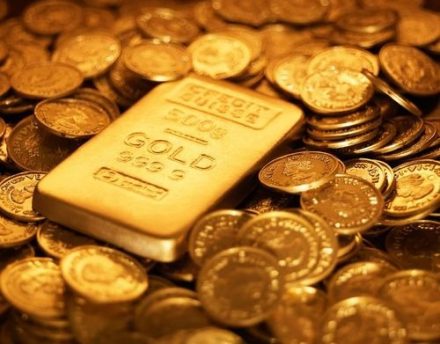
One of the most popular methods in Iran is purchasing physical gold, such as Bahar Azadi coins, half-coins, and gold bullion. This method, due to the tangible nature of the asset and ease of sale, is favored by many households. However, risks such as fraud or short-term price fluctuations should be considered.
Indirect Investment: Gold Investment Funds and Commodity Exchange
Gold funds such as “Ayar,” “Zar,” “Tala,” and “Gohar” are exchange-traded instruments offering lower risk and higher transparency for investing in gold. These funds are suitable for those with greater financial knowledge or those seeking indirect investment options.
Best Strategies for Buying and Selling Gold During Inflationary Periods
- Dollar-Cost Averaging (DCA): Buying gradually over time to mitigate the impact of fluctuations.
- Long-Term Investment in Physical Gold: To hedge against monetary risks.
- Diversification Across Tools: Combining physical and fund-based investments.
- Monitoring Economic News: Making decisions based on up-to-date Central Bank data and global gold prices.
Challenges and Risks of Investing in Gold During Inflationary Periods
Investing in gold is recognized as one of the best methods to combat inflation, but it is not without risks and challenges. Understanding these challenges helps investors make smarter decisions and better manage potential risks.
Risk of Severe Gold Price Volatility in Iran
One of the greatest risks of investing in gold in Iran is the severe and sometimes unpredictable price volatility. This volatility is tied to factors such as exchange rate changes, government decisions, sanctions, and global gold price fluctuations. Investors must be prepared for sudden price changes and potential declines in investment value.
Risk of Economic and Currency Policy Decisions
Government economic and currency policies significantly impact the gold market. Sudden decisions, such as exchange rate changes, new taxes, or restrictions on gold imports, can quickly affect the market and cause price volatility. These policy risks require investors to continuously monitor news and government policies.
Managing Risks in the Gold Market
To reduce risks in the gold market, investors should diversify their portfolios and not rely solely on gold. Using fundamental and technical analysis, setting stop-loss and take-profit levels, and choosing the right timing for buying and selling are key risk management strategies. Additionally, staying informed about economic and political news, particularly changes in exchange rates and government policies, significantly helps reduce risks.
Future Outlook for Gold Prices Based on Inflation Forecasts
Accurate analysis of economic conditions and inflation forecasts is critical to predicting future gold prices. This section examines inflation forecasts and their impact on the gold market.
Inflation Forecasts for Iran’s Economy
According to reports from the Central Bank and the Iran Statistics Center, inflation rates may continue to rise in the coming years due to economic pressures from sanctions, currency fluctuations, and rising production costs. Increasing inflation in Iran’s economy is likely to strengthen demand for gold as an inflation hedge.
Analysis of Domestic and International Experts’ Views on the Gold Market’s Future
Domestic and international economic and financial experts believe that, given the expansionary monetary policies of global central banks and increasing liquidity, gold prices are likely to follow an upward trend in the long term. Analysts of Iran’s market also predict increased domestic demand for gold, which will drive price growth.
Economic Scenarios and Their Impact on Gold Prices
Given the complex economic conditions, several scenarios exist for the future of gold prices: In the first scenario, inflation is controlled, and gold prices stabilize; in the second, inflation rises, leading to upward gold price trends; and in the third, severe economic and political crises drive gold prices sharply higher as a safe-haven asset.
Conclusion
This article provided an in-depth examination of the relationship between inflation and gold prices in Iran, analyzing the direct and indirect impacts of inflation on the gold market. We also addressed the challenges and risks of investing during inflationary periods and the future outlook for the gold market.
It is recommended that investors consider gold as a primary option for protecting their assets’ value against inflation while understanding the risks and managing investments appropriately, leveraging accurate market analysis.
Frequently Asked Questions (FAQ)
Why Do Gold Prices Increase During Inflationary Periods?
Because during inflationary periods, the value of the national currency declines, and people seek to preserve their assets’ value. Gold, as a safe-haven asset, experiences high demand, leading to price increases.
Is Gold the Best Investment During Inflation?
Gold is a suitable option, but the best investment depends on market conditions, risk tolerance, and the investor’s goals.
How Can the Best Gold Investment Strategy Be Chosen?
Using fundamental and technical analysis, monitoring market fluctuations, and managing risks can help select an appropriate strategy.
How Do the Dollar Price and Inflation Relate to Gold Prices in Iran?
Rising dollar prices and inflation increase gold prices in Iran, as gold is priced in dollars, and inflation reduces the value of the national currency.
What Factors Can Reduce Inflation’s Impact on Gold Prices?
Controlling exchange rates, appropriate government monetary policies, and economic stability can mitigate inflation’s impact on gold prices.