

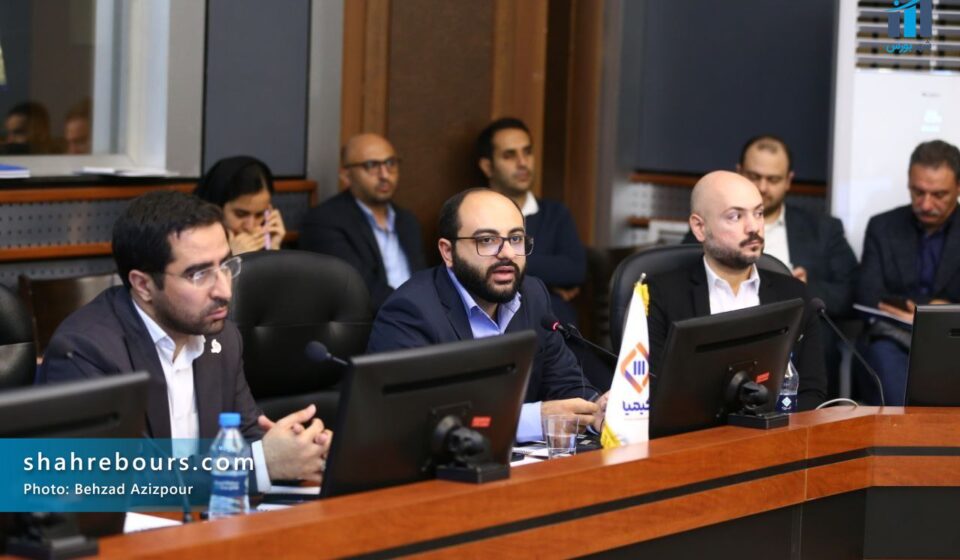
According to the Shahr-e-Bourse, Hassan Chenarani, a member of the board of directors of Rayan Hamafza Company, explained the role of gold funds in risk management and market trends in the specialized panel “Market Analysis and Gold Funds; Trends and Forecasts” on the sidelines of Kish Inox 2025. Referring to gold-based instruments, he stated: Gold-based instruments provide appropriate risk coverage for producers and merchants and at the same time allow financing for producers; this instrument maintains strategic reserves compared to similar conditions.
He added: “Given the recent events in the country, financial markets did not have a balanced pace and some sectors turned to applications and experienced risk problems, while this situation could have been a good opportunity for risk management and portfolio diversification.”
Referring to the historical growth of funds, Rayan Hamafza, a member of the board of directors of the company, stated: If we examine the growth in the number of funds since August 2017, when the first fund was launched, we have reached about 17 active funds in November 2025. Commodity exchange statistics show that there are 24.4 tons of gold bullion as a backup in the treasury, which is a significant number, and more than 700,000 people are directly and indirectly involved in the market.
He pointed to the value of assets and said: According to statistics as of November 18, the net value of the funds’ issuance since the beginning of 2025 shows about 36 hemat of real money inflow, and the total value of assets has reached more than 145 hemat. Although there was a negative period due to the market closure in July, the overall trend has been upward and with the increase in the price of gold, demand-based issuance has also increased.
Chenarani explained in a global comparison: The largest gold fund in the United States has about 1,800 tons of assets, while the total assets of gold funds in Iran are only 21 tons. The Ayyar Fund, with about 7 tons, is the largest fund in Iran and covers more than 30 percent of the market share.
He also pointed out the advantages of the Gold Union issuance mechanism and noted: This mechanism facilitates access to funds without the need for a trading code and outside trading hours, and developments are underway in mobile applications to make access easier.
Chenarani listed the challenges of the capital market and said: The services and outputs of the funds are similar to each other, and users have turned to simpler options due to the complexity. The main advantage of the secondary market is its lack of complexity, but the disadvantages include limited liquidity, different volatility, being affected by the domestic exchange rate, and lack of transparency in the composition of assets and fund management. Education and awareness through meetings can solve some of these problems.
Board member Ryan Hamafza concluded by pointing to development proposals, saying: “To increase market depth, stronger market makers and more leverage requirements should be added. Tax incentives and a fee system are also necessary, as funds compete with competing physical markets. In addition, clarifying asset diversification, such as the mix of gold, silver and platinum, and developing easier trading tools and systems will strengthen risk hedging.”